





Regional Scorpion Sting Surveillance Through Emergency Pain Medication Patterns
Syndromic surveillance relies on tracking clinical patterns before laboratory confirmation turns a suspicion into a confirmed diagnosis. Pain medication requests at regional emergency departments can serve as a sensitive signal when something unusual is happening in the community. Applied to scorpion stings, this approach offers a way to spot clusters in remote and tropical Australia where laboratory testing may be delayed or unavailable.
Australia hosts several scorpion species, particularly across the Top End and arid inland regions, though serious envenomation remains uncommon compared with snake or spider bites. Still, the discomfort of a sting often drives a patient straight to an emergency department for analgesia, making regional pain relief patterns a useful proxy for community-level exposure. Building that signal into existing surveillance channels gives public health teams a faster way to recognise when stings are rising in a given locality.
Why scorpion envenomation deserves a syndromic approach
Traditional scorpion sting surveillance depends on case reports filtered through hospitals, poison information centres, and the Australian Institute of Health and Welfare data sets. Each step takes time, and rural clinicians managing a single painful sting rarely escalate the case beyond routine paperwork. By the time aggregated numbers reach an epidemiologist, the exposure window may have already closed.
A syndromic approach flips the timeline. Instead of waiting for confirmed reports, analysts monitor pre-diagnostic indicators such as emergency presentations coded for unspecified envenomation or acute limb pain following an outdoor encounter. Scorpion stings in Australia produce a fairly distinctive clinical picture: sudden burning pain, often without visible swelling, sometimes accompanied by systemic symptoms in sensitive individuals. That pattern leaves a clear footprint in triage notes.
The value of catching these signals early is twofold. Communities get timely warnings about local scorpion activity during warm wet seasons, and clinical teams can pre-position antivenom where it is rarely stocked. The Cairns and Townsville hospital catchments already log scorpion presentations during the build-up months, and the same rhythm applies further inland around Longreach and Mount Isa.
Pain medication requests as a leading indicator
Analgesic prescribing provides a quantifiable trail that public health analysts can follow almost in real time. Opioid and strong combination analgesic use in particular spikes when patients present with envenomation pain that does not respond to standard paracetamol. Mapping the volume of these requests against historical baselines reveals when a region is experiencing more sting-related presentations than usual.
The strength of this indicator lies in its consistency. Patients stung while camping along the Savannah Way, working on cattle stations near Alice Springs, or clearing debris after a storm in the Kimberley all tend to seek rapid pain relief rather than diagnostic certainty. This means emergency department pharmacy logs can act as an early warning layer even when the sting itself is not yet coded in the discharge summary.
Building a robust signal needs a small set of rules. Flag any day when strong analgesic requests for envenomation-compatible presentations exceed two standard deviations above the seasonal mean. The threshold can be tuned to avoid false alarms and cross-referenced with ambulance dispatch from the same postcode. Once calibrated, the algorithm travels well to other regional hospitals.
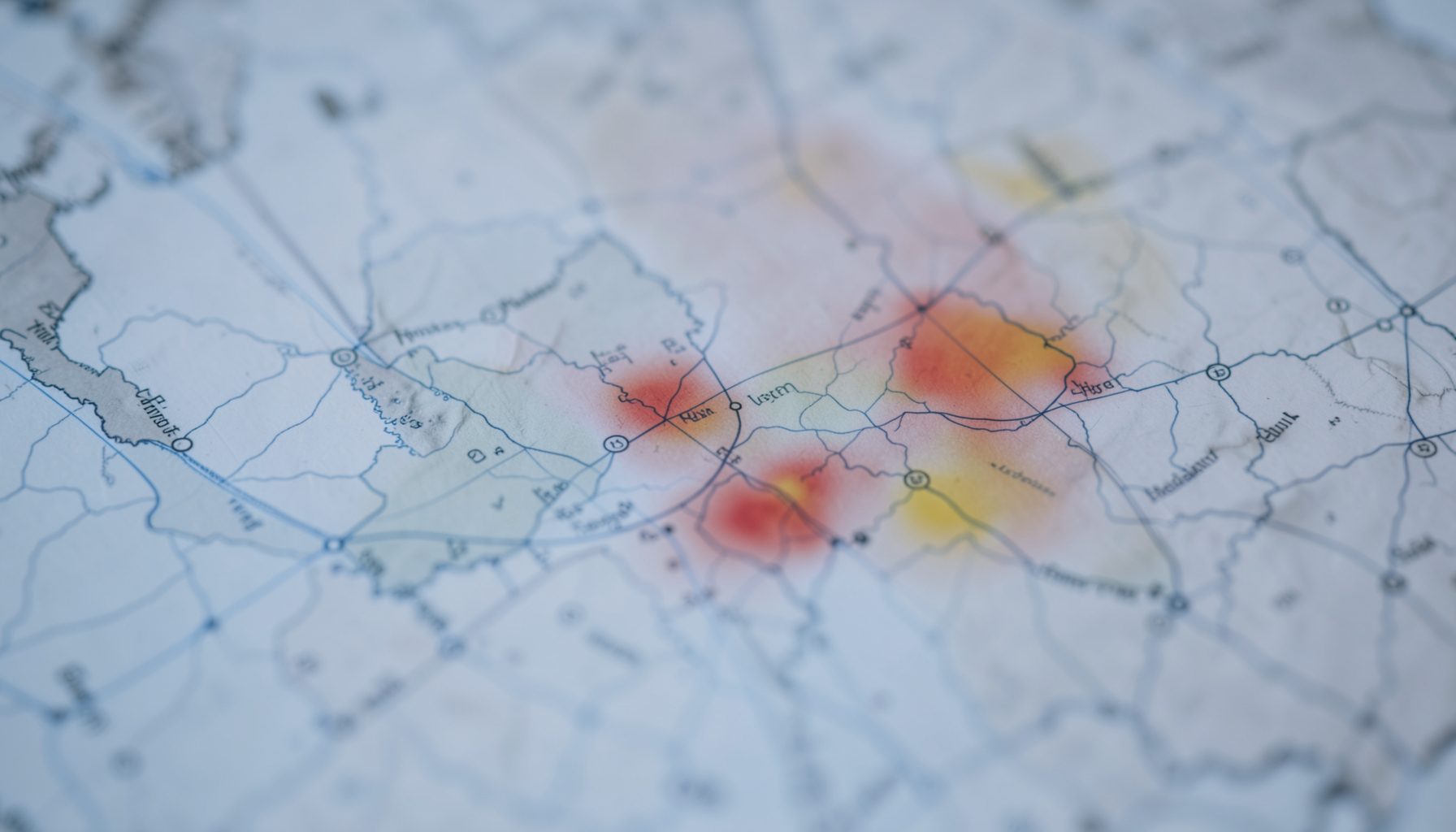
Mapping regional ED patterns across northern Australia
Northern Australia offers a useful laboratory for this kind of surveillance because of its distinctive mix of remote populations, transient tourism, and outdoor workforces. The Royal Flying Doctor Service routinely transfers envenomation cases from cattle stations, mine sites, and Indigenous communities to regional hubs like Darwin, Katherine, and Cairns. Each transfer is preceded by an analgesia event at a small clinic or bush hospital that can be logged into the syndromic system.
Tracking these events across multiple sites reveals patterns invisible to a single facility. A rise in pain relief requests at a remote Western Australian clinic can be paired with the next day's emergency department load in Broome or Perth to confirm whether a localised cluster is occurring. The same approach works across state borders, which matters because scorpion habitat does not respect the Northern Territory-Queensland line. Aggregating data from the Top End to the Cape York Peninsula gives a more complete picture of seasonal exposure.
Tourist movements add another layer worth monitoring. Visitors to Kakadu, Litchfield, or the Daintree often underestimate the risk of turning over rocks or sleeping on the ground in scorpion habitat. A surge in pain relief requests among travellers can trigger targeted messaging through national parks, visitor centres, and tour operators before more people are exposed.
Integrating pharmacy signals with clinical data
Pharmacy surveillance adds depth to the emergency department view by capturing what happens after the patient goes back to the community. Top-up prescriptions, over-the-counter analgesic purchases, and pharmacist consultations can all reflect ongoing pain from incidents that never warranted a hospital visit. Combining these data streams with the ED signal sharpens the picture considerably.
Recent work on pharmacy daily data demonstrates how daily sales aggregates can flag unusual spikes within hours rather than weeks. For scorpion surveillance, pharmacy analytics can be tuned to track requests for opioid combination analgesics, certain topical pain relief products, and even antivenom-related counselling. When a regional pharmacy reports an unexpected cluster of such requests, the public health unit can cross-reference it with the ED signal and dispatch an alert to local clinicians and community leaders.
This integrated model also supports better stewardship. Australia has worked hard to reduce inappropriate opioid prescribing, and a scorpion sting signal is exactly the kind of event where short-course strong analgesia is clinically appropriate. Knowing that the rise is envenomation-driven helps prescribers justify treatment decisions and helps regulators ensure supply chains can handle sudden local demand.
Cross-border and cross-sector surveillance
Health emergencies do not align with administrative boundaries, and scorpion sting clusters are no exception. A seasonal spike around the Gulf Country affects Queensland, the Northern Territory, and Western Australia simultaneously, so surveillance must operate at a scale larger than a single local health district. Australia's federation makes this slightly complex, but the practical answer is to mirror the approach used for other emerging threats.
Comparable work on cough-related ED visit data shows how a single symptom pattern can be tracked across multiple jurisdictions and integrated into a national early warning view. The same architecture, with different thresholds, can support envenomation surveillance. Standardising codes for sting, envenomation, and severe limb pain across hospital systems makes cross-border analysis reliable, while shared protocols let public health units exchange signals without compromising patient privacy.
Cross-sector work extends beyond hospitals. School absenteeism, aged care incident logs, and workplace injury reports can each add a confirming signal when scorpion activity rises. The Pharmaceutical Benefits Scheme already records certain analgesic prescriptions in near-real time, providing a national backbone that regional surveillance efforts can plug into without duplicating infrastructure.
Building alerts for vulnerable remote populations
Some communities face a higher sting risk than others. Remote Indigenous communities in the Tanami, Western Kimberley, and Cape York regions often encounter scorpions around dwellings and outdoor sleeping areas, and their access to immediate analgesia can be limited. A syndromic alert that flags rising sting activity in a specific community allows the local clinic to pre-position appropriate analgesics and brief community health workers on presentation patterns.
The Royal Flying Doctor Service plays a vital role here, and integrating its retrieval data with the syndromic signal can reveal whether a remote cluster is severe. When the service begins logging more retrievals for envenomation-compatible presentations from a particular region, the alert can be escalated. A calm retrieval pattern alongside a rising ED signal suggests a community is coping without evacuation, which is useful information for planners.
Older residents in aged care facilities also benefit. Staff in these settings are often first to notice unusual insect activity around buildings and can record bites and stings promptly. Feeding that information into the surveillance system alongside ED and pharmacy data creates a richer picture of community risk, allowing them to adjust footwear routines and bed inspection practices before more stings occur.
Practical steps for Australian health services
Building a scorpion sting surveillance capability does not require new infrastructure. Most regional hospitals already collect triage data, pharmacy logs, and discharge summaries in electronic form. The work is largely about aligning those data streams with a clear case definition and a sensible baseline derived from several seasons of history.
The first step is to define what counts as a scorpion-compatible signal. A practical definition combines the clinical syndrome, the season, and a small geographic filter. From there, daily counts of strong analgesic requests, envenomation-coded ED presentations, and pharmacy over-the-counter sales can be merged into a single dashboard. A regional health service can start with one indicator and expand as confidence grows.
Training matters as much as technology. Triage nurses, pharmacists, and remote area nurses need to know what data points feed the surveillance system and why accurate coding matters. Briefings can be tied to annual envenomation updates already offered by state health departments. Once the human side is in place, the system runs quietly in the background and alerts the right people when something unusual appears, much like the epinephrine auto-injector surveillance model already in place for anaphylaxis monitoring.
Public health teams in Australia can begin this work with the data they already hold. By linking regional emergency department pain relief requests, pharmacy sales, and remote clinic logs into a single syndromic view, the country gains a powerful early warning layer for scorpion sting activity. The same architecture can later extend to other envenomation risks and seasonal hazards. Visit the syndromic surveillance resource hub to explore implementation guides, baseline data templates, and case studies from comparable regional systems, and start a pilot in one or two northern regions this coming season.