




Emergency department signals for measles importation
Australia has interrupted sustained endemic measles transmission, so a case arriving from overseas can have disproportionate consequences. Using emergency department fever and rash presentations to identify measles importation is not about treating every febrile rash as measles. It is about recognising a constellation early enough to test, isolate and investigate exposure before laboratory confirmation.
Emergency department syndromic surveillance does this by tracking symptom patterns before a final diagnosis exists. Fever with rash, respiratory symptoms or both can reveal activity that laboratory systems miss during the interval between illness onset and testing. The signal is investigative rather than diagnostic, and it works best when clinical, laboratory and public-health data are reviewed together.
Why the fever and rash combination matters
Measles often begins with several days of fever, cough, runny nose, conjunctivitis and marked malaise, followed by a spreading maculopapular rash. Not every patient shows that full sequence. Infants, people with prior vaccination and people who receive immunoglobulin may have atypical or milder signs, so a narrow syndrome rule would miss useful cases.
A fever-and-rash query is deliberately broad. It can capture measles alongside dengue, varicella, rubella, scarlet fever, meningococcal disease, hand, foot and mouth disease, and drug or viral eruptions. Its value lies in sensitivity and speed: repeated or clustered visits at one hospital or across a region can justify a targeted clinical review even when individual diagnoses remain uncertain.
No symptom pattern proves importation. That designation depends on the case definition, laboratory evidence and an exposure history linking the infection to travel or contact outside Australia. The ED signal should open that investigation, not pre-judge it. It can show where and when compatible illness is concentrating, while public-health teams establish whether a flight, household, school or workplace connection exists.
Turning ED observations into an early-warning signal
A useful ED feed may combine chief complaints, triage diagnoses, observed temperatures, age, location, arrival time and, where lawful and available, laboratory ordering. Free-text terms such as “fever”, “rash”, “viral illness” or “measles concern” can improve case finding, but inconsistent documentation and coding differences can distort comparisons.
The operational pathway matters as much as the query. Staff need a rapid case definition, a process for airborne precautions, access to appropriate testing, and a named clinician or public-health liaison who receives alerts. Hospitals can test whether the alert is known, whether a specimen was collected and whether advice was acted upon. These workflow measures reveal whether surveillance is functioning, not merely whether data arrived.
Baseline and thresholds should be set locally. A single febrile rash presentation may be ordinary activity; several similar presentations close in time or place may warrant escalation. Seasonal influenza, gastroenteritis outbreaks and school holidays can create noise, while a small jurisdiction may see large percentage changes from very few cases. Stratification by age, vaccination status, travel history and clinic can make the signal more specific without making it fragile.
Importation, arrival hubs and onward risk
International arrival points concentrate the early risk. Melbourne, Sydney, Brisbane, Perth and Adelaide connect travellers with communities that may have little recent exposure to measles. A symptomatic traveller may seek care near an airport, in a large metropolitan ED or later in a local town. Timely syndromic detection can shorten the interval before the person reaches family members, childcare, school or healthcare workers.
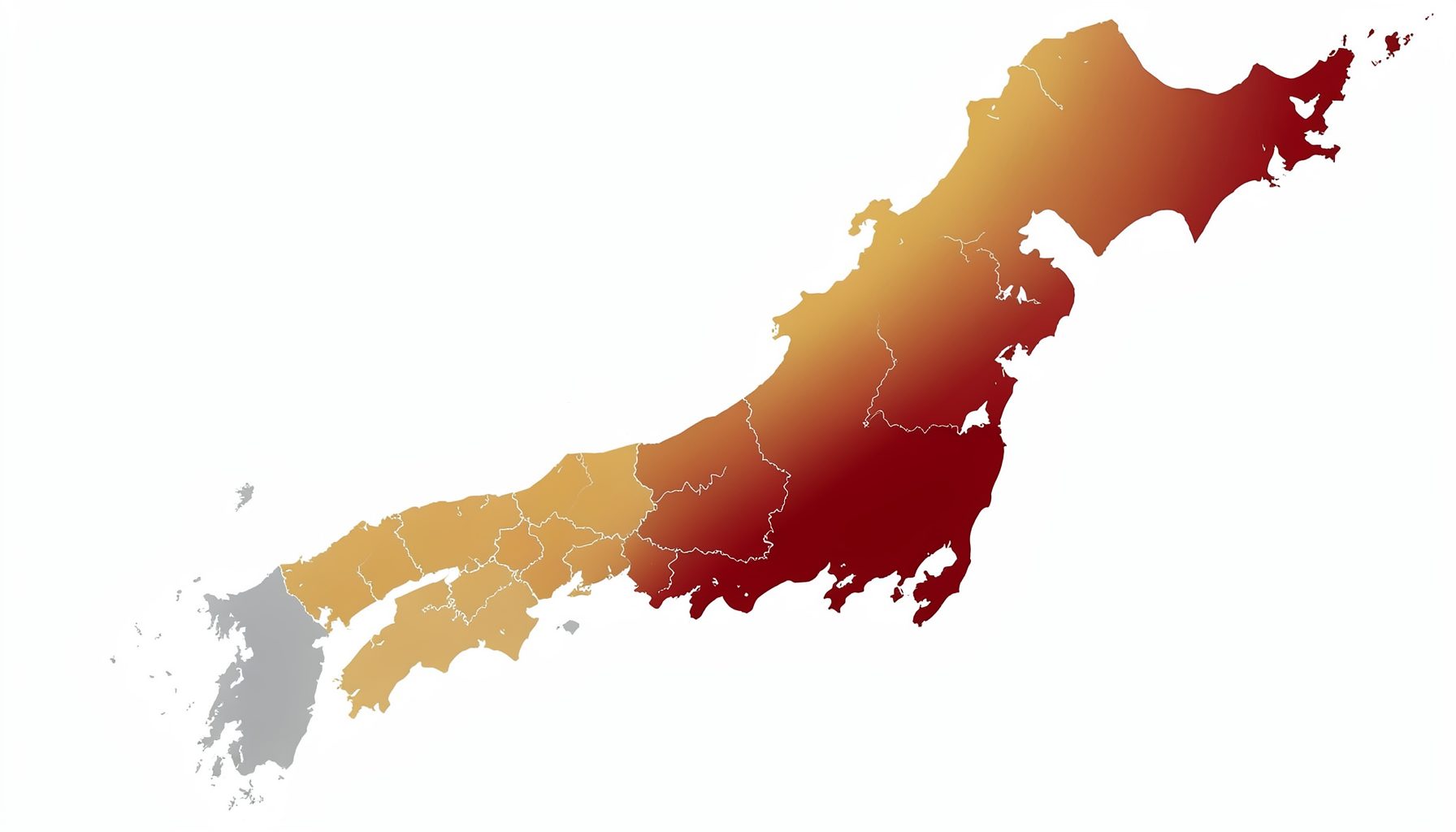
Japan’s approach illustrates how airport and community data can be combined. During periods of heightened monitoring around major international events, clinics, hospitals, ambulances, pharmacies, schools, residential care and laboratories contribute different perspectives on illness. The airport capture-recapture method offers a way to estimate cases from overlapping clinic reports, helping teams judge whether apparent increases reflect surveillance artefacts, additional cases or both.
Australia can adapt the principle without copying a centralised model wholesale. Airports, general practices and EDs should know when clinicians are seeing fever with rash in returned travellers, while state and territory public-health units can connect those presentations with testing, flight and contact information. Event-based intensification should be proportional: a short period of extra querying around mass gatherings or periods of high travel is often more useful than permanent alert fatigue.
Combining multiple surveillance channels
A single ED feed sees only people who seek urgent care and only the features recorded at that encounter. Japan’s multi-channel system is powerful because no source is treated as complete. Ambulance dispatch can indicate severe or rising community illness, pharmacy sales may expose earlier increases in respiratory symptoms, and laboratory reporting can confirm the pathogen and its distribution.
Schools add a different lens. Absenteeism can precede formal diagnosis, but it is also influenced by holidays, weather and ordinary respiratory seasons. Analysing absenteeism alongside illness indicators and local context makes it more useful. The school handwashing data shows how behavioural information can support prevention and outbreak interpretation when it is interpreted as one signal among several, rather than as a measles-specific measure.
A practical Australian architecture can use a shared alert taxonomy while keeping data governance with each jurisdiction. Hospitals send de-identified syndromic counts, community pharmacies contribute aggregated sales or symptom data, schools report absenteeism through secure channels, aged-care providers flag clusters, and laboratories return positive results. Linkage uses date, place, age band and, when appropriate, a trusted identifier. Aggregation preserves privacy while allowing teams to test whether independent channels are moving together.
Local realities that shape Australian response
Australia’s health system combines public hospitals, private hospitals, Medicare-funded general practice and community pharmacy, so surveillance cannot rely on one provider type. Public EDs are a major gateway for urgent illness, but private hospitals and after-hours services also encounter returned travellers. Reporting duties and pathways differ across states and territories, making the relevant local health unit essential for notification, testing and infection-control advice.
The way people describe symptoms also matters. In an ED, an Australian clinician may hear “the kid’s off”, “not feeling 100%” or a parent attributing a widespread rash to “heat rash”. Interview prompts should ask about rash onset, cough, eye irritation, recent travel, contact with sick people and vaccination. In northern Queensland, tropical infections and heat-related eruptions remain plausible alternatives, so local differential diagnosis is as important as international measles concern.
High-risk settings need specific routes into the same response. Older people, immunocompromised patients and residents of aged-care facilities can experience severe disease, while low immunity in some communities may increase the consequences of delay. The long-term-care outbreak surveillance demonstrates how symptom reports and resident outcomes can be combined in residential settings. In Australia, facilities should have a direct escalation pathway to their public-health unit rather than relying only on routine institutional reporting.
Actions that reduce the delay to action
A successful programme links detection with decisions that can happen before a laboratory result is available.
- Use a broad fever-and-rash query, then review clustered presentations by place, date, age and clinical features rather than relying on one diagnosis code.
- Ask returned travellers about flights, dates, countries, departure and arrival points, and contact with children, schools, healthcare workers and high-risk relatives.
- Put suspected measles cases on airborne precautions immediately, mask the patient when tolerated and follow local infection-control and negative-pressure room guidance.
- Collect appropriate specimens early and coordinate testing through the laboratory network while considering the need for urgent public-health notification.
- Establish one named contact for alerts and a daily reconciliation of ED signals, laboratory notifications and public-health investigations.
- Escalate clusters, healthcare-worker cases, vulnerable-group cases and events linked to international travel or mass gatherings.
The dashboard should show time from arrival to alert, alert to clinical review, alert to specimen collection and specimen collection to result. Reviewing these intervals with frontline staff identifies practical bottlenecks, such as missing travel questions, unavailable isolation space or delayed courier collection. Measures of isolation and contact tracing are also essential because detection has little value if a patient leaves the ED without advice or a safe plan.
Turn early warning into rapid control
Start now by agreeing a common fever-and-rash case definition and escalation threshold across each jurisdiction’s ED, laboratory, airport and public-health network. Rehearse the pathway through a realistic scenario: a returned traveller presents with fever and rash while laboratory confirmation is pending, another compatible case appears nearby, and local teams must coordinate isolation, testing and exposure checks.
Make the first alert count. Notify the relevant state or territory public-health unit as soon as measles is clinically suspected, preserve the opportunity for timely specimen collection and use the syndromic signal to focus investigation. If compatible presentations cluster, act on the combined clinical and epidemiological evidence now, rather than waiting for every result. Early containment protects Australian communities while the laboratory record catches up.