





Mining Ambulance Narratives for Earlier Cluster Headache Signals
Ambulance services record much more than a dispatch category or final diagnostic code. Free-text notes may describe a patient pacing in agony, pressing a hand against one eye, reporting repeated attacks at the same time each night, or receiving oxygen before transport. These details can reveal a pattern that structured data misses, creating an opportunity for earlier detection of cluster headache activity.
Syndromic surveillance applies this principle to health information collected before laboratory confirmation or a settled diagnosis. The broader syndromic surveillance network model brings together signals from healthcare settings and community services, while ambulance narratives can add a valuable view of acute, severe presentations. In Australia, such monitoring could support faster clinical recognition, appropriate referral and better planning for emergency demand.
Why Cluster Headaches Produce Valuable Early Signals
Cluster headache is an uncommon primary headache disorder, but its attacks are distinctive and intensely painful. A typical episode involves severe pain around or behind one eye, usually on one side, with symptoms such as tearing, a blocked or runny nostril, eyelid drooping, facial sweating or marked restlessness. Attacks may recur several times a day and often appear in bouts lasting weeks or months.
Patients frequently describe behaviour that differs from the stillness associated with migraine. Someone with a migraine may prefer a dark, quiet room, while a person experiencing cluster headache can pace, rock, cry out or repeatedly change position. These behavioural clues may appear in paramedic narratives even when “cluster headache” is absent from the initial dispatch code.
The timing of attacks is also informative. Some people report episodes during the night, shortly after falling asleep, or at remarkably regular intervals. Seasonal recurrence, alcohol as a trigger during an active bout, and repeated ambulance attendance can strengthen the signal. None of these features proves a diagnosis, but together they can indicate a cluster of similar headache-like presentations requiring clinical review.
What Free-Text Ambulance Data Can Add
Structured ambulance fields usually capture age, sex, location, priority, transport destination and broad symptoms. Free text supplies context: “worst pain behind right eye”, “tearing and pacing”, “third episode this week”, or “oxygen relieved symptoms briefly”. Natural language processing can convert these descriptions into coded features while retaining the original note for authorised clinical assessment.
A practical vocabulary would include terms for unilateral orbital pain, autonomic symptoms, agitation, recurrent attacks, nocturnal onset and oxygen administration. Australian spelling variations, abbreviations and colloquial language need attention. “Headache”, “migraine”, “one-sided eye pain” and “face pain” may describe overlapping experiences, while “restless”, “unable to settle” and “walking around” may point to the characteristic agitation of cluster headache.
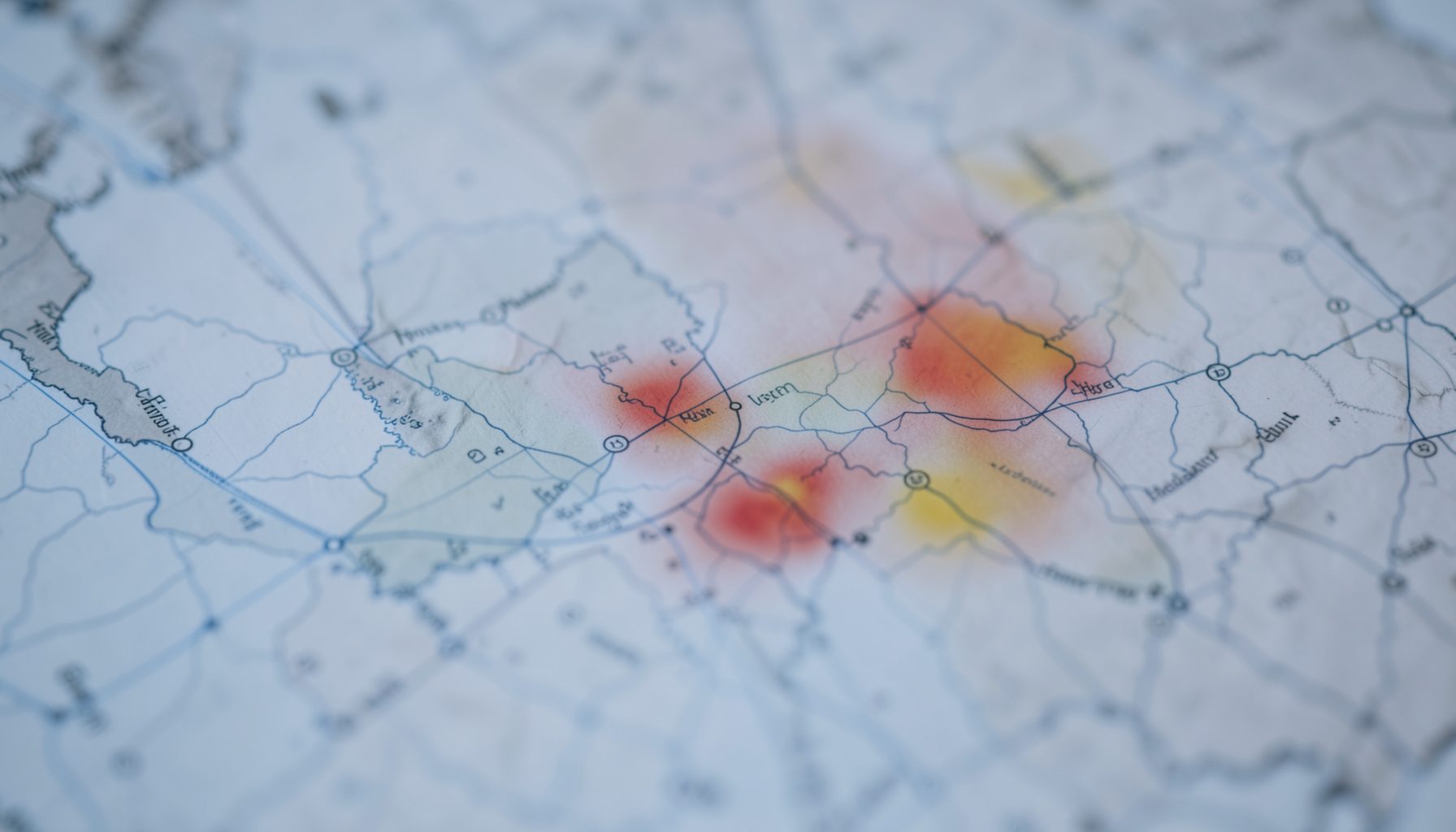
The system should search for combinations rather than isolated keywords. “Severe headache” alone is too common to generate a useful alert. A stronger pattern might combine repeated attendance with unilateral eye pain and tearing, or identify a sudden rise in similar free-text descriptions within one metropolitan area. Temporal and geographic aggregation helps distinguish a genuine signal from a single unusual case.
Building a Safe Detection Pipeline
The first stage is data preparation. Ambulance services would need consistent access to computer-aided dispatch records, electronic patient care reports and relevant clinical narratives. Text should be de-identified or pseudonymised before analytical use, with strict controls around access, retention and secondary use. Location can be aggregated to a suitable level, such as a local government area or health district, rather than exposing a patient’s address.
Natural language processing may use dictionaries, regular expressions and machine-learning classifiers. A dictionary can identify terms such as “tearing”, “ptosis” or “behind the eye”, while a classifier can interpret phrases such as “kept rubbing the left eye and walking around”. Negation handling is essential: “no visual symptoms” should not be treated as evidence of visual symptoms. The model must also distinguish a patient’s history from a paramedic’s differential diagnosis.
A staged approach is preferable. Begin with a transparent rules-based screen, review false positives with headache specialists and ambulance clinicians, then test a more advanced model against manually labelled records. Performance should be measured with sensitivity, specificity, positive predictive value and alert timeliness. Since cluster headache is relatively rare, precision matters: a dashboard that floods an epidemiology team with ordinary headache cases will quickly lose operational value.
Separating a Clinical Signal from an Outbreak
Cluster headache is not an infectious disease outbreak. The word “cluster” refers to a pattern of attacks in one person or a group of people with a similar disorder, not transmission between individuals. A rise in ambulance records could reflect improved awareness, a local clinical campaign, a coding change, a heatwave, an event, or increased access to emergency transport rather than a shared cause.
This distinction makes validation crucial. A possible signal should be compared with emergency department diagnoses, pharmacy dispensing trends, neurology referrals and calls to health advice services where available. Analysts should also check whether a particular ambulance station changed its documentation template or whether a new clinical pathway encouraged staff to record oxygen use more consistently.
Confounding symptoms deserve careful review. Meningitis, subarachnoid haemorrhage, acute glaucoma, stroke, sinus disease, trauma and substance-related illness can all present with severe head or facial pain. A surveillance flag must never reassure clinicians that a dangerous condition is “just cluster headache”. Its role is to prompt review, not replace triage, examination or diagnostic imaging.
Adapting the Model to Australia
Australia’s ambulance services operate across state and territory jurisdictions, each with its own data systems, governance arrangements and clinical protocols. A pilot in metropolitan Melbourne may have different documentation practices from one in Brisbane or Perth. Ambulance Victoria, NSW Ambulance and other services would need a shared minimum dataset while preserving local control over identifiable clinical information.
The national emergency number, Triple Zero (000), generates records from a wide range of settings: apartment towers in Sydney, suburban homes in Adelaide, workplaces in Canberra and remote communities where transport times are long. Population density, distance to hospital and access to neurologists can alter both the likelihood of calling an ambulance and the wording of the record. A model trained only on inner-city cases may perform poorly in regional and remote Australia.
Local health networks, primary health networks and hospital headache clinics could use a validated signal to support referral pathways. For example, repeated presentations across several emergency departments in western Sydney might justify a case-finding review, while a rural service could use the same information to identify patients who need telehealth neurology support. Any implementation should account for culturally safe care, interpreter needs and unequal access to specialist services.
Connecting Ambulance Signals with Other Channels
Ambulance narratives become more useful when interpreted alongside other syndromic sources. Emergency department chief complaints, pharmacy sales, general-practice encounters and hospital admissions can show whether the pattern is appearing across the health system. Pharmacy surveillance may be especially relevant for medicines used during acute headache care, although dispensing data cannot establish why a medicine was supplied.
School absenteeism is unlikely to be a primary indicator for adult cluster headache, yet it demonstrates how a multi-channel system can detect health changes in different populations. The school surveillance resource illustrates the value of monitoring routine absence data as an early community signal. In a broader Australian platform, schools, pharmacies and ambulance services would contribute different perspectives rather than being forced into a single measure.
Environmental and event-related information can add context. Smoke from bushfires, extreme heat, pollen, major sporting events and disruptions to public transport may affect emergency presentations or documentation volume. Experience with ambulance allergy monitoring shows how free-text ambulance records can help identify patterns that deserve public-health attention, even when the underlying condition is not infectious.
Turning Alerts into Useful Action
An alert should have a defined audience and response. A public-health intelligence team might receive a weekly report of unusual increases, while an ambulance clinical governance unit could receive a near-real-time quality signal. A hospital network might use the information to review repeated attendances and coordinate a headache clinic referral. Without an agreed action, surveillance becomes passive counting.
Alert thresholds should reflect baseline volume, seasonality and data quality. A statistical method such as a moving average or control chart can identify a sustained increase, but thresholds should be adjusted for population size and ambulance activity. A small regional service may need a lower absolute count and more manual review, while Sydney’s larger volume may require stricter criteria to avoid routine variation being treated as an event.
Feedback improves both the model and patient care. Clinicians can indicate whether a flagged narrative represented confirmed cluster headache, migraine, another emergency or insufficient information. Ambulance educators can then develop concise prompts for documenting attack timing, side, autonomic features, previous episodes and treatments given. Clear documentation supports the patient’s next clinician, whether that is an emergency doctor, general practitioner or neurologist.
Protecting Patients While Improving Recognition
Free-text mining involves sensitive health information, and severe headache narratives may contain names, addresses, family details and other identifiers. Governance should cover lawful collection, minimum necessary use, access logging, encryption, retention periods and independent oversight. Results should generally be reported in aggregate, with identifiable review limited to authorised clinical or quality-improvement purposes.
Patients should not be labelled publicly or automatically entered into a disease register because an algorithm detected “cluster-like” language. Human review and clinical confirmation remain essential. Model outputs should be framed as possible patterns, with uncertainty displayed clearly and no automated treatment recommendation attached to the alert.
The benefit is greatest when surveillance supports earlier recognition without creating new barriers. A person repeatedly calling 000 for severe orbital pain may receive a more coherent assessment, information about specialist care and a plan for future attacks. At a system level, ambulance services can understand demand, hospitals can coordinate follow-up and researchers can study care pathways using appropriately governed data.
A carefully designed free-text mining programme can turn ambulance narratives into an early clinical signal for cluster headache activity. Start with transparent methods, validate them against real patient records and connect the findings with emergency, pharmacy and community data. Australian health agencies, ambulance services and clinical partners can use this approach to improve recognition while protecting privacy and preserving the central role of professional diagnosis.