





Detecting Cholera Signals in Returning Travelers
Cholera is uncommon in Australia, but imported infections can create an early warning problem for public-health teams. A returning traveler may first present with acute watery diarrhoea at a general practice clinic, emergency department, pharmacy, or telehealth service, often before a stool sample is collected and before a laboratory result becomes available. Syndromic surveillance helps identify that first pattern.
The most useful approach is not to treat every episode of diarrhoea as cholera. It is to combine symptoms, recent travel, age, location, care setting, and changes over time. A single severe case after travel to a country experiencing an outbreak deserves clinical attention; several similar presentations clustered in one city or linked to the same itinerary may justify a broader public-health response.
Australia’s geography makes this especially important. International arrivals concentrate through Sydney, Melbourne, Brisbane, Perth, Adelaide, and Darwin, while people may then travel thousands of kilometres by air, road, or rail. A person exposed overseas can develop symptoms after reaching a regional community, a mining camp, or a remote Northern Territory settlement, making rapid signal detection valuable even when case numbers are small.
Why Cholera Needs a Syndromic Signal
Cholera is caused by toxigenic Vibrio cholerae and typically produces sudden, profuse watery diarrhoea that can lead to dehydration within hours. Vomiting may occur, while fever is often absent or mild. These features overlap with many other causes of gastroenteritis, including norovirus, food poisoning, enterotoxigenic E. coli, and illness associated with contaminated water.
A syndromic algorithm therefore acts as a screening and prioritisation tool rather than a diagnostic test. It can flag patients whose symptoms and circumstances warrant prompt assessment, rehydration, stool testing, infection-control advice, or notification to the relevant public-health authority. Laboratory confirmation remains essential for identifying the organism and guiding formal public-health action.
Returning travelers provide a particularly informative subgroup. Travel history can be structured around arrival date, countries visited, rural or urban exposure, accommodation, drinking water, seafood consumption, and contact with people who had diarrhoea. A symptom onset window connected to recent international travel is often more useful than a broad count of all diarrhoeal presentations.
The signal may be stronger when several data sources point in the same direction. Emergency-department records can show acute dehydration, ambulance data can reveal clusters of severe illness, and pharmacy sales may show unusual demand for oral rehydration products or antidiarrhoeal medicines. These indicators should be interpreted together rather than treated as interchangeable evidence.
Building the Algorithm Around Australian Data
A practical algorithm can begin with a broad “acute diarrhoea” syndrome and then add layers of specificity. The first layer may include terms such as watery diarrhoea, vomiting, dehydration, gastroenteritis, and intravenous fluid treatment. The second can identify travel-related language, recent international arrival, airport presentation, or a return from a high-risk area. The third can prioritise severe illness, hospital admission, ambulance transport, or unusually frequent presentations.
Natural-language processing can search free-text triage notes, while coded diagnoses and presenting complaints provide more consistent fields for routine reporting. Algorithms should account for spelling differences, abbreviations, and Australian clinical terminology. “Gastro,” “loose stools,” “watery bowel motions,” and “fluid loss” may describe the same syndrome in different settings.
Data from general practices, hospitals, urgent-care centres, pharmacies, schools, aged-care facilities, and laboratories can be combined into a multi-channel picture. School absenteeism is unlikely to identify cholera specifically, but a sudden rise in gastrointestinal-related absence can indicate a local enteric outbreak. Aged-care reporting may help identify vulnerable residents who require urgent hydration and infection-control measures.
The architecture should preserve the distinction between an alert and a case. A rule might generate a high-priority alert when acute watery diarrhoea, recent overseas travel, and dehydration occur together. A lower-level alert could be triggered by a rise in travel-associated diarrhoea without severe symptoms. This tiered design reduces unnecessary escalation while keeping the threshold low for severe or unusual presentations.
Linking Travel, Place, and Time
Time is central to interpreting returning-traveler signals. The system should record symptom onset, date of arrival in Australia, departure from the suspected exposure area, and date of healthcare contact. An onset soon after arrival may reflect overseas exposure, while a later cluster among household contacts could indicate local transmission or a shared Australian exposure.
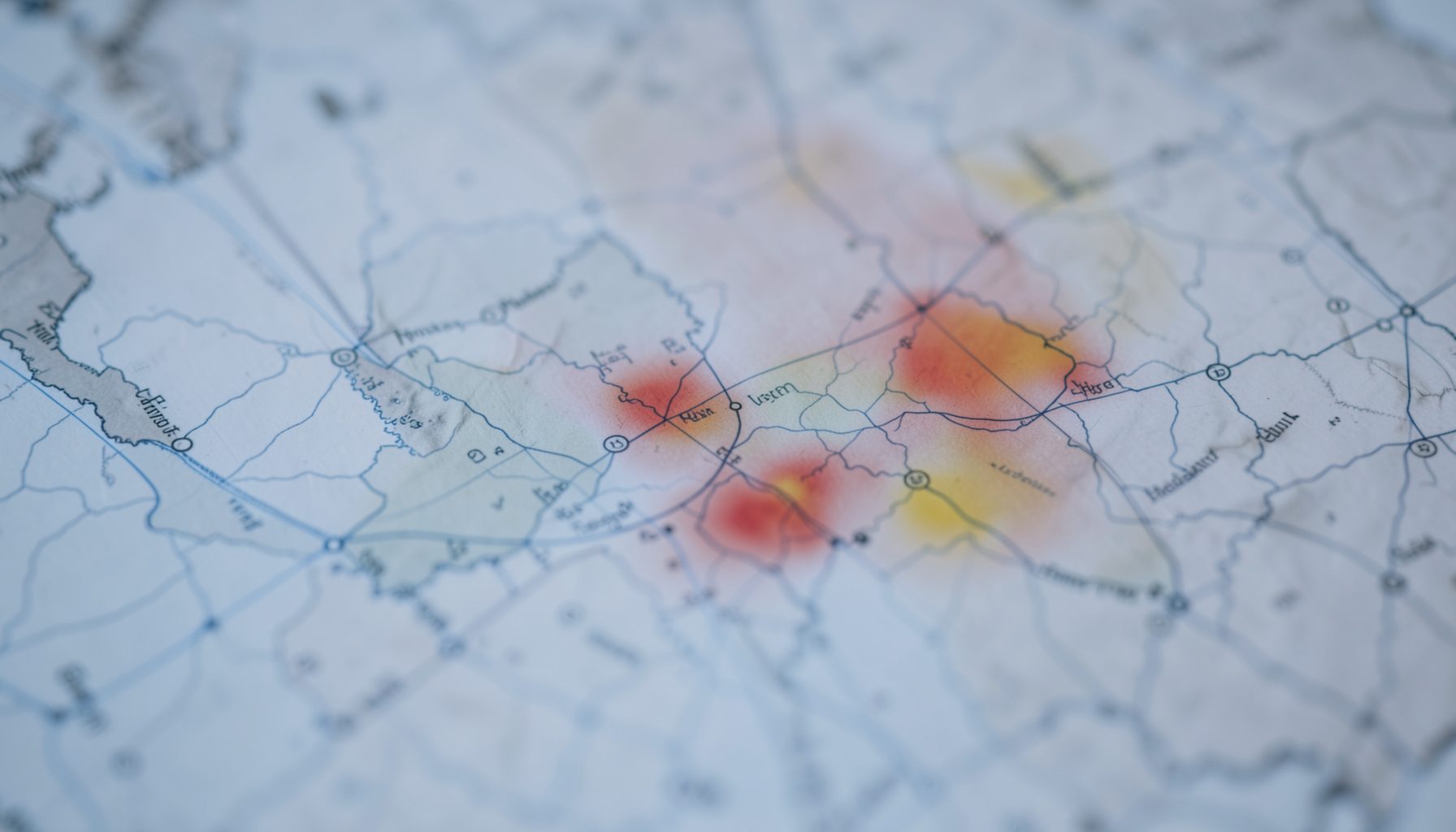
Place adds context. A patient seen in a Melbourne emergency department may have arrived through Sydney, spent time in Cairns, and travelled through several communities. A Brisbane pharmacy cluster may relate to a tour group, a university residence, or a cruise itinerary rather than the suburb where medicines were purchased. Geocoding should therefore support both residence and likely exposure locations.
Australian travel patterns create distinctive analytical issues. Backpackers may move through hostels along the east coast, families may return from South-East Asia during school holidays, and FIFO workers may move between Perth and remote worksites. International sporting tournaments, religious gatherings, and major events in Sydney or Melbourne can increase short-term population movement and complicate interpretation of case clusters.
A useful dashboard can display daily counts, seven-day baselines, age groups, travel regions, severity markers, and reporting sites. It should show whether the increase is broad or confined to one facility. Seasonal effects, holiday periods, and changes in coding practice must be visible, because a higher number of presentations after a long weekend does not automatically indicate cholera.
The logic resembles a system in which many independent tables produce partial information that must be read together; a multi-table tournament is an unusual but useful analogy for understanding why one stream rarely explains the whole pattern. In surveillance, the aim is to combine weak signals without allowing one noisy source to dominate.
Validation, Privacy, and Public-Health Action
Before deployment, an algorithm should be tested against historical gastroenteritis data and simulated returning-traveler cases. Analysts can measure sensitivity, specificity, positive predictive value, alert volume, and the time between presentation and review. Testing should include ordinary diarrhoeal illness, known foodborne outbreaks, and confirmed imported infections so that performance is realistic.
False positives are expected. A heatwave, gastroenteritis outbreak on a cruise ship, or increased norovirus activity can produce a similar pattern. The algorithm should therefore show the terms and data elements that caused an alert. Transparent rules allow epidemiologists and clinicians to judge whether a signal is plausible rather than accepting an unexplained score.
Privacy safeguards are essential when linking travel and health information. Use the minimum necessary data, restrict access by role, separate identifiable case management from routine trend reporting, and apply aggregation when presenting geographic results. Small communities require particular care because a map or dashboard can unintentionally identify a household, workplace, or visiting group.
Alerts should lead to defined actions. A severe suspected case may require immediate clinical stabilisation, isolation precautions appropriate to the presentation, stool collection, and notification under Australian public-health arrangements. A cluster may prompt interviews about travel and food or water exposures, communication with laboratories, and coordination between state or territory health authorities.
The system should also support feedback. If a flagged patient has a negative test or a different diagnosis, that information can improve future rules. If a confirmed cholera case was missed because travel history was absent from the initial record, the workflow should be revised so that triage staff, clinicians, or electronic forms capture it more reliably.
Using Pharmacy and Community Signals
Pharmacy surveillance can provide an earlier community-level indication than hospital data, especially when people self-manage mild diarrhoea. Changes in purchases of oral rehydration salts, electrolyte drinks, gastrointestinal medicines, and disposable hygiene products may help identify an emerging cluster. These products are not specific to cholera, so sales data should be used to support, not replace, clinical and laboratory information.
Australia’s pharmacy market varies by setting. A large Chemist Warehouse in suburban Melbourne may have a different customer profile from an independent pharmacy in Broome, a tourist-area outlet in Cairns, or a regional pharmacy serving seasonal workers. Baselines should be established locally, with attention to stock shortages, promotions, holiday travel, and changes in consumer behaviour.
Community reporting can add another layer. School absenteeism, aged-care facility reports, workplace sick leave, ambulance call-outs, and health-direct contacts may reveal illness among people who have not yet visited a clinic. A rise in absenteeism after a school excursion or among a group returning from overseas can help investigators decide where to seek more detailed information.
Communication must be proportionate and precise. Public-health messages can emphasise safe drinking water, hand hygiene, early medical care for severe diarrhoea, and the importance of telling clinicians about recent travel. Broad warnings that imply widespread local cholera can cause unnecessary fear, disrupt tourism, and place pressure on emergency departments.
Operational Recommendations
- Define a layered case-finding algorithm that separates general diarrhoea, travel-associated illness, severe dehydration, and high-priority suspected cholera.
- Capture arrival dates, countries visited, accommodation, symptom onset, and exposure details in consistent clinical and public-health fields.
- Combine hospital, ambulance, pharmacy, school, aged-care, laboratory, and community data with local baselines.
- Validate alerts against seasonal gastroenteritis, foodborne outbreaks, coding changes, and known imported infections.
- Create a clear escalation pathway for testing, notification, infection control, epidemiological interviews, and public communication.
A strong surveillance program should make the next clinical decision faster without pretending to provide certainty before laboratory confirmation. For Australian health services, that means building travel-sensitive diarrhoeal algorithms into existing reporting channels rather than creating an isolated cholera tool. The approach can be refined through collaboration with clinicians, laboratories, pharmacists, epidemiologists, and state and territory health authorities.
Technical teams developing or reviewing these workflows can use the surveillance contact page to exchange questions about syndromic monitoring, data integration, and early-warning practice. Timely reporting of unusual diarrhoeal illness, especially after international travel, helps transform scattered presentations into an actionable public-health signal.